
For many firearm owners, the journey doesn’t end when they walk out of the gun store with a factory-standard model. In fact, that is often where the real journey begins. The world of gun customization is vast, offering enthusiasts the opportunity to transform a mass-produced tool into a personalized instrument of precision and beauty.
Whether you are a competitive shooter looking for a split-second advantage, a hunter seeking better ergonomics, or a collector wanting to preserve a family legacy, understanding the different paths of modification is essential. This guide explores the two primary pillars of firearms customization: performance-based upgrades and aesthetic enhancements. By understanding the “why” behind each service, you can decide which path best serves your collection.
I. Performance-Based Customization: The Pursuit of Excellence
Performance customization focuses on the mechanical and ergonomic aspects of the firearm. The goal here is simple: make the gun shoot better, faster, and more reliably. For many, this is the most practical application of gun customization.
A. Trigger Actions and Internal Refinement
The trigger is the most critical point of contact between the shooter and the machine. Factory triggers often have a heavy pull or a “mushy” break to meet broad safety standards. Professional customization can involve “trigger jobs” that lighten the pull weight, shorten the reset, and provide a crisp, glass-like break. This level of detail is a staple of firearms customization, as it directly reduces human error and improves down-range accuracy.
B. Barrel Fitting and Recoil Management
Upgrading to a match-grade barrel or adding a compensator can significantly change a firearm’s behavior. For those who enjoy classic platforms, revolver customization often involves shimming the cylinder or recutting the forcing cone to ensure perfect alignment with the barrel. These technical adjustments ensure that every ounce of energy is directed toward the target, rather than lost through mechanical play.
II. Aesthetic Enhancements: The Art of the Arm
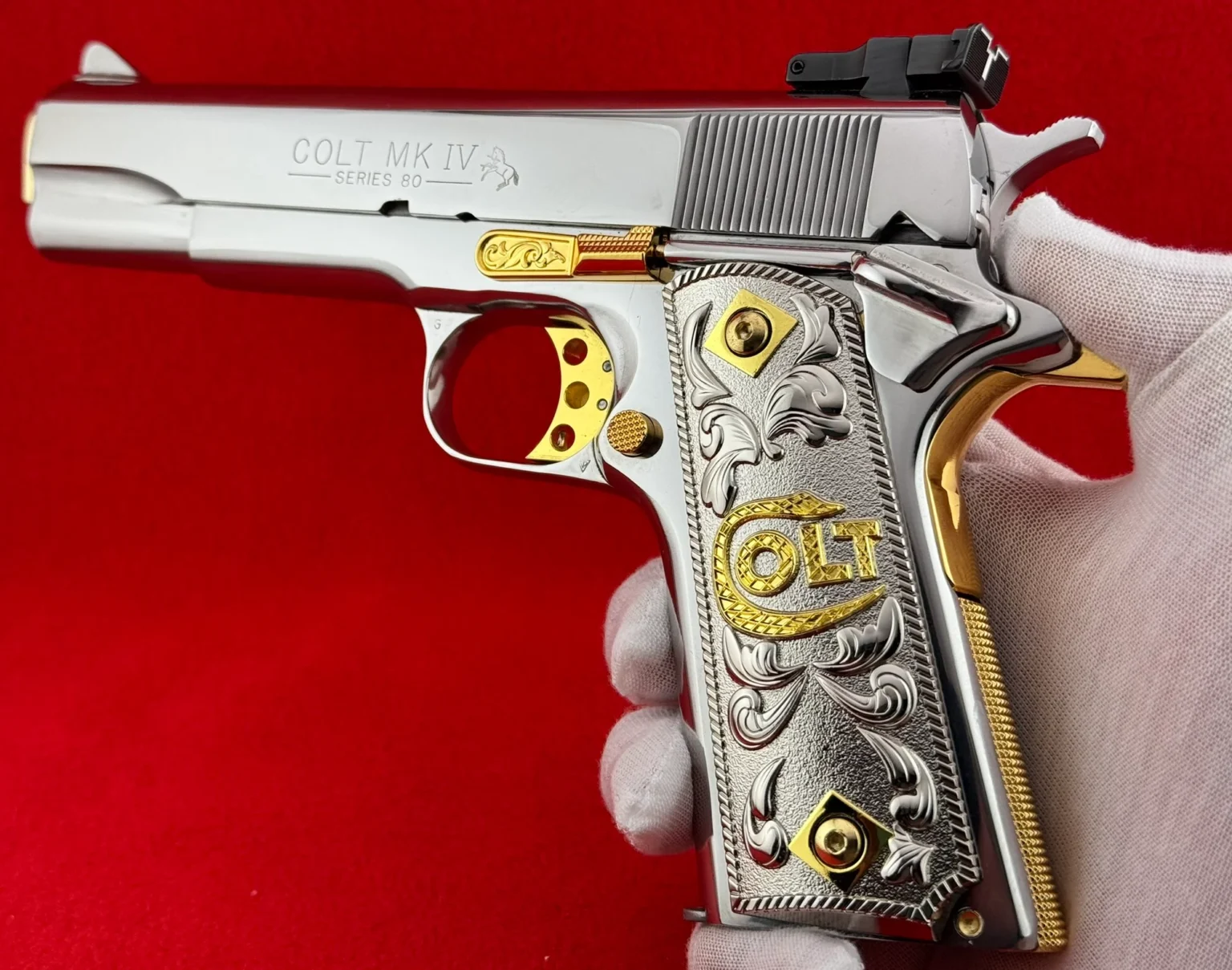
While performance keeps you on target, aesthetic enhancements are what make a firearm truly yours. This side of gun customization treats the firearm as a canvas, blending traditional craftsmanship with modern technology.
A. Master Engraving and Metal Work
Engraving is perhaps the oldest form of personalized weaponry. From subtle initials on a trigger guard to full-coverage scrollwork on a slide, metal engraving adds a layer of sophistication that factory models simply cannot replicate. In the realm of revolver customization, engraving is particularly popular, as the large surface area of the cylinder and frame provides the perfect space for intricate storytelling or floral patterns.
B. Advanced Finishes: Cerakote and Bluing
Modern finishing techniques offer more than just good looks; they provide protection. Cerakote is a ceramic-based finish that can be applied in virtually any color or pattern, offering incredible resistance to wear and corrosion. Conversely, traditional high-polish bluing provides a deep, mirror-like finish that defines luxury. Choosing the right finish is a hallmark of high-end firearms customization, ensuring the piece remains beautiful even after years of use.
III. Finding the Middle Ground: Functional Aesthetics
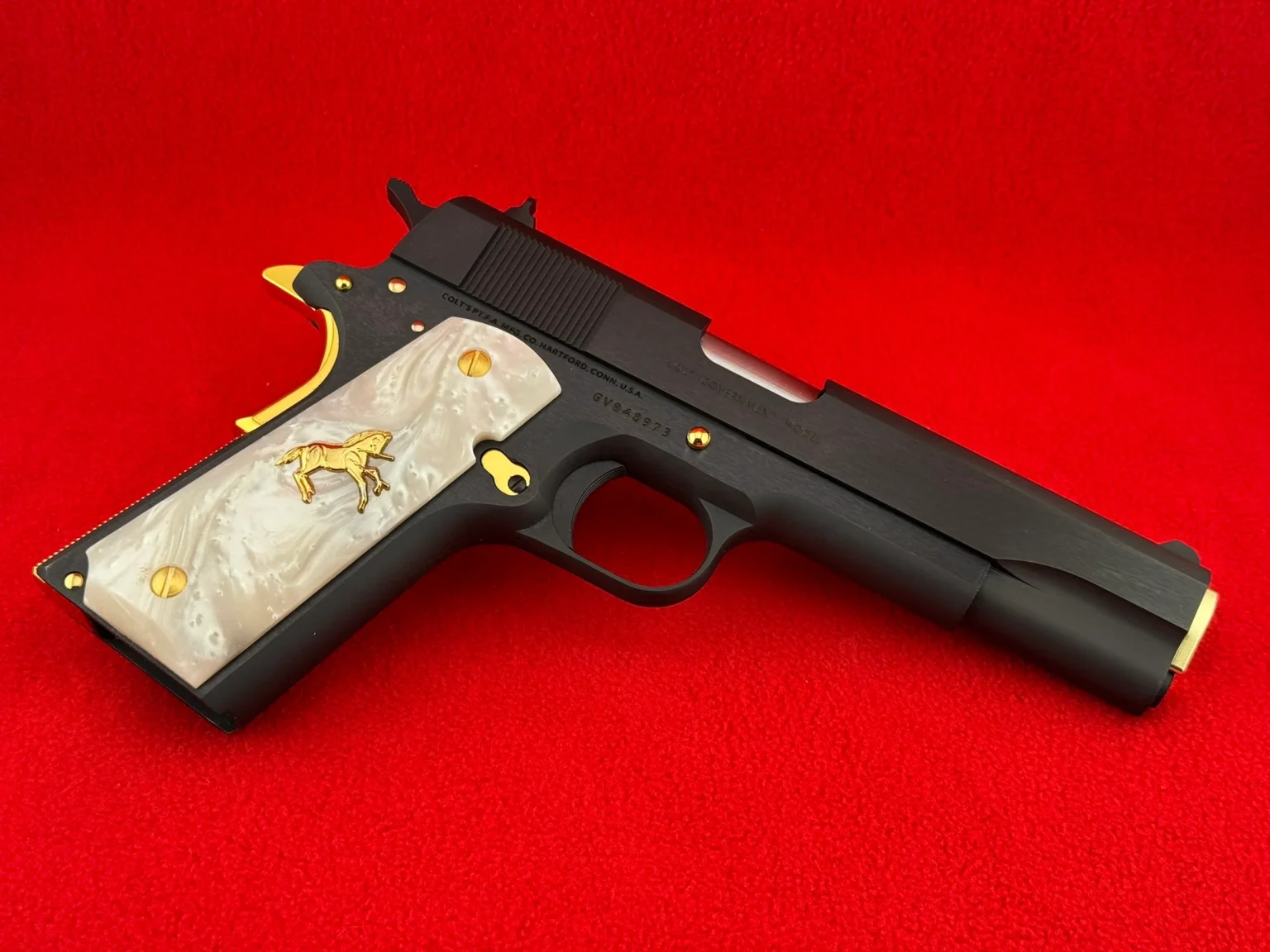
The best custom projects often sit at the intersection of form and function. You don’t always have to choose between a gun that looks good and one that performs well.
A. Custom Grips and Stippling
Changing the grips is one of the easiest ways to dive into gun customization. For semi-automatics, “stippling” involves burning a texture into the polymer frame to provide a better purchase. For revolvers, replacing rubber factory grips with hand-carved walnut or exotic horn is a classic example of revolver customization that improves both the look and the feel of the draw.
B. Optic Cuts and Machining
Modern shooters are increasingly moving toward red-dot optics. Milling a slide to accept an electronic sight is a functional necessity for many, but the machining patterns themselves can be styled to add a futuristic, aggressive look to the firearm.
IV. Determining Your Customization Path
Before committing to a project, ask yourself: What is the primary purpose of this firearm?
- The Daily Carry:Focus on reliability and ergonomics. A smooth trigger and high-visibility sights are more important than gold inlays.
- The Competition Piece:Prioritize performance. Look for barrel porting, flared magwells, and weight-reducing slide cuts.
- The Heirloom:Focus on the aesthetic. This is the time to invest in master engraving and premium wood grips that will be admired for generations.
Regardless of the path you choose, firearms customization should always be performed by qualified professionals. Precise machining and mechanical timing are not areas where you want to take shortcuts.
Your Legacy, Custom-Built
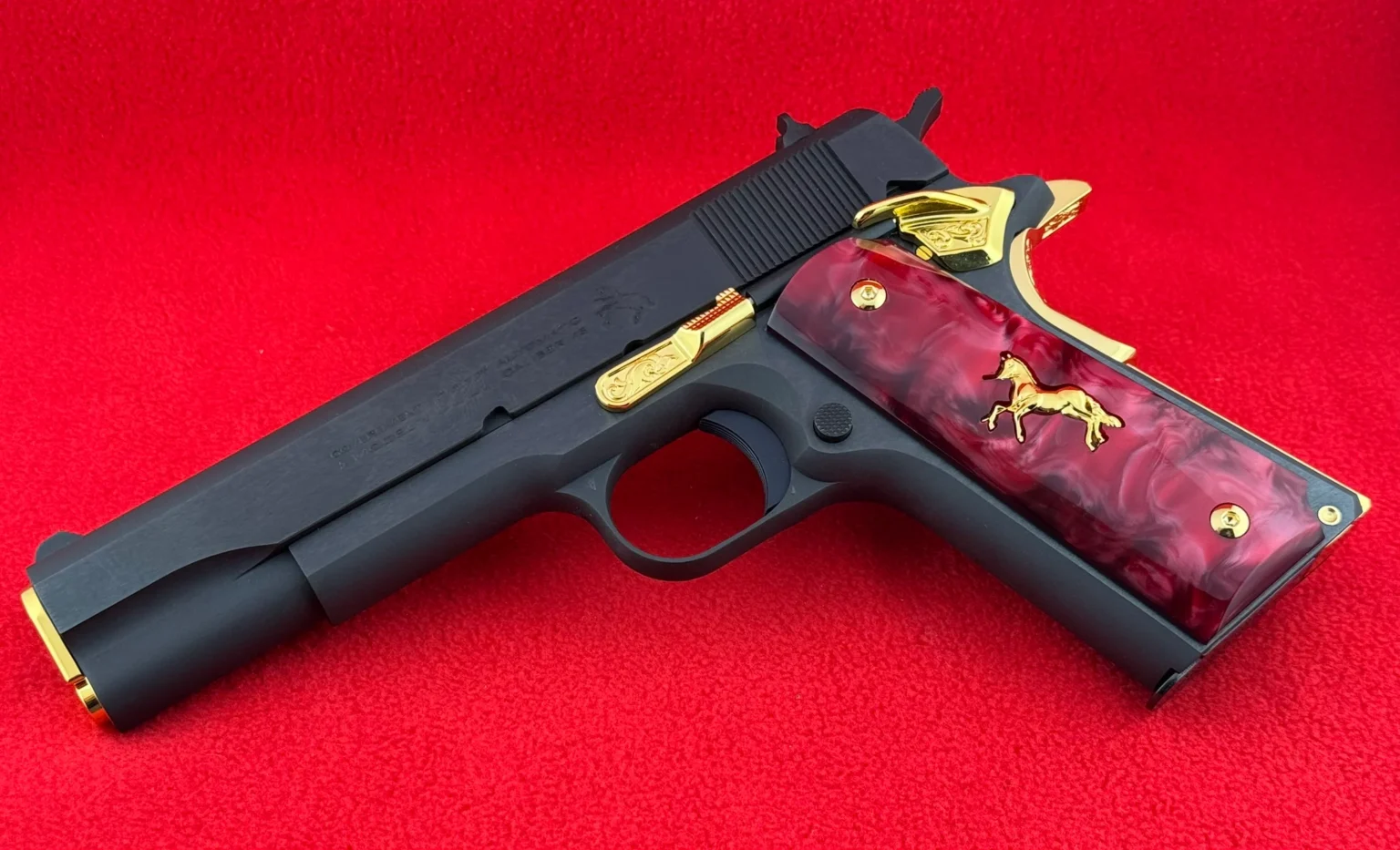
A firearm is an investment, but a customized firearm is a legacy. Through the careful application of gun customization, you take ownership of every aspect of your tool—from the way the trigger breaks to the way the light catches the engraved steel. Whether you are performing a deep-dive revolver customization or simply adding a custom finish to your favorite rifle, you are creating something that is uniquely yours.
Ready to transform your firearm into a one-of-a-kind masterpiece? At Gun Decor Emporium, we specialize in high-end aesthetic enhancements and the artistic side of gun customization. From master engraving to premium finishes, we help you define your legacy. Contact us today to discuss your vision for your next custom project!