

For anyone who has spent time maintaining a firearm collection, the primary enemy is rarely the range or the field—it is the atmosphere itself. Steel is a remarkably strong material, but it is also chemically reactive. In the presence of oxygen and even a trace of moisture, carbon steel begins to oxidize, leading to surface rust and, eventually, deep pitting. While traditional bluing offers a classic aesthetic, it is essentially a controlled form of rust that provides very little real-world protection against the elements.
To truly protect the integrity of your investment, you have to look toward a more permanent solution. Professional finishes are more than just a cosmetic upgrade; they are a mechanical necessity for longevity. Understanding how electroplating prevents corrosion is the first step in moving from temporary maintenance to permanent preservation.
The Science of the Metallic Bond
The reason electroplating is so effective is found at the atomic level. Unlike paints, cerakotes, or other “top-down” coatings that simply sit on the surface of the metal, electroplating uses an electrochemical process to create a molecular bond. The firearm parts are cleaned and polished, and then submerged in a solution where electricity is used to move metal ions from a donor source to the surface of the steel.
Because this bond happens at the molecular level, the resulting finish follows every microscopic contour of the firearm. This uniform shield is what ensures electroplating prevents corrosion in the tightest spots, such as the threads of a screw or the interior of a magazine well, where oil often fails to reach.
Nickel: The Industrial-Strength Workhorse
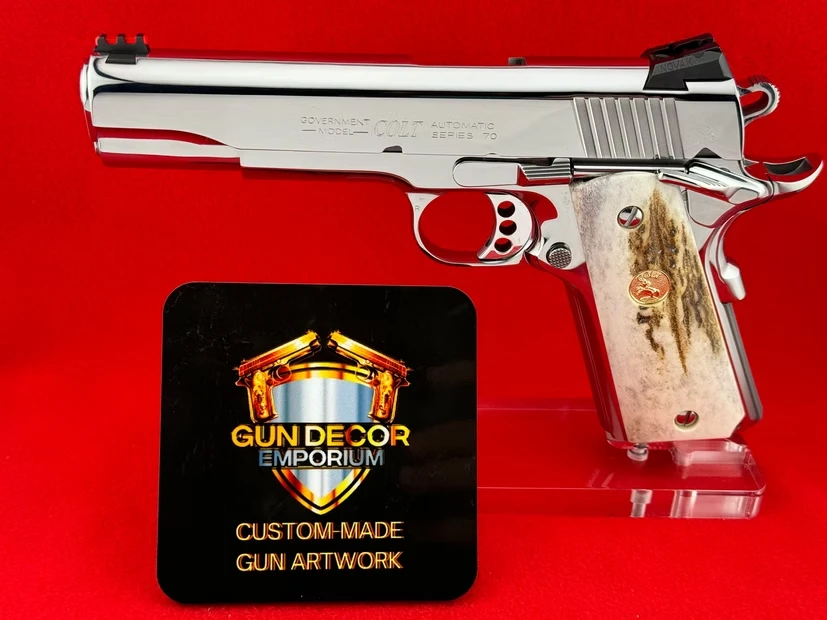
For those who carry their firearms daily, friction and humidity are constant threats. Nickel electroplating has long been the gold standard for working guns because of its unique physical properties. Nickel is significantly harder than the carbon steel underneath, meaning it acts as a sacrificial barrier against the abrasive friction of a holster.
Furthermore, nickel electroplating has a very low coefficient of friction. This “slickness” is a major advantage for the internal moving parts of a firearm.
Gold: The Noble Barrier
While many view gold as a purely aesthetic choice for “barbecue guns” or presentation pieces, it is actually one of the most chemically stable materials on the planet. In the world of high-end preservation, 24K gold electroplating offers a level of chemical immunity that no other metal can match.
Gold is a “noble metal,” meaning it does not react with oxygen. It literally cannot rust or tarnish. When a collector chooses 24K gold electroplating, they are essentially encasing the steel in a permanent, non-reactive shell.
Extending Life Through Surface Hardness
A common point of failure for many firearms is holster wear. Because a professional finish like nickel electroplating is so much more durable than traditional finishes, it can withstand years of active use without thinning. This is the practical side of why electroplating prevents corrosion: it keeps the protective barrier intact long after a standard finish would have failed.
The team at Gun Decor Emporium understands that a firearm is both a tool and a legacy. Whether you are looking to revitalize a working gun or preserve a family heirloom, we have the expertise to deliver a masterpiece that lasts. Visit us today to explore custom plating options!